
sand3d 1.6.2
3D modeling in Python, built for LLMs
sand3d is a library for writing 3D objects as short programs: profiles, solids, edits,
frames, joints and assemblies, over Blender's bpy. A program says how a shape is made, part by part
and in its own words, so a model writes it in a few hundred tokens and a person can read it.
Why sand3d
s3d.<verb> surfaceFewer tokens for the same object
median of the other program's tokens over sand3d's · o200k_base, code only · per part: the table
The same part or object, written in sand3d and in another language: the Blender Python an LLM writes for 30 parts from public CAD models (9 of 30 build the right part; all 30 in sand3d), the CAD datasets' own CadQuery and FeatureScript programs, and Articraft's own programs for 12 articulated objects. The sand3d programs are written for this repo, each matching its reference mesh. Objects that come as meshes are not compared: no program exists to set beside sand3d's.
A whole object, part by part
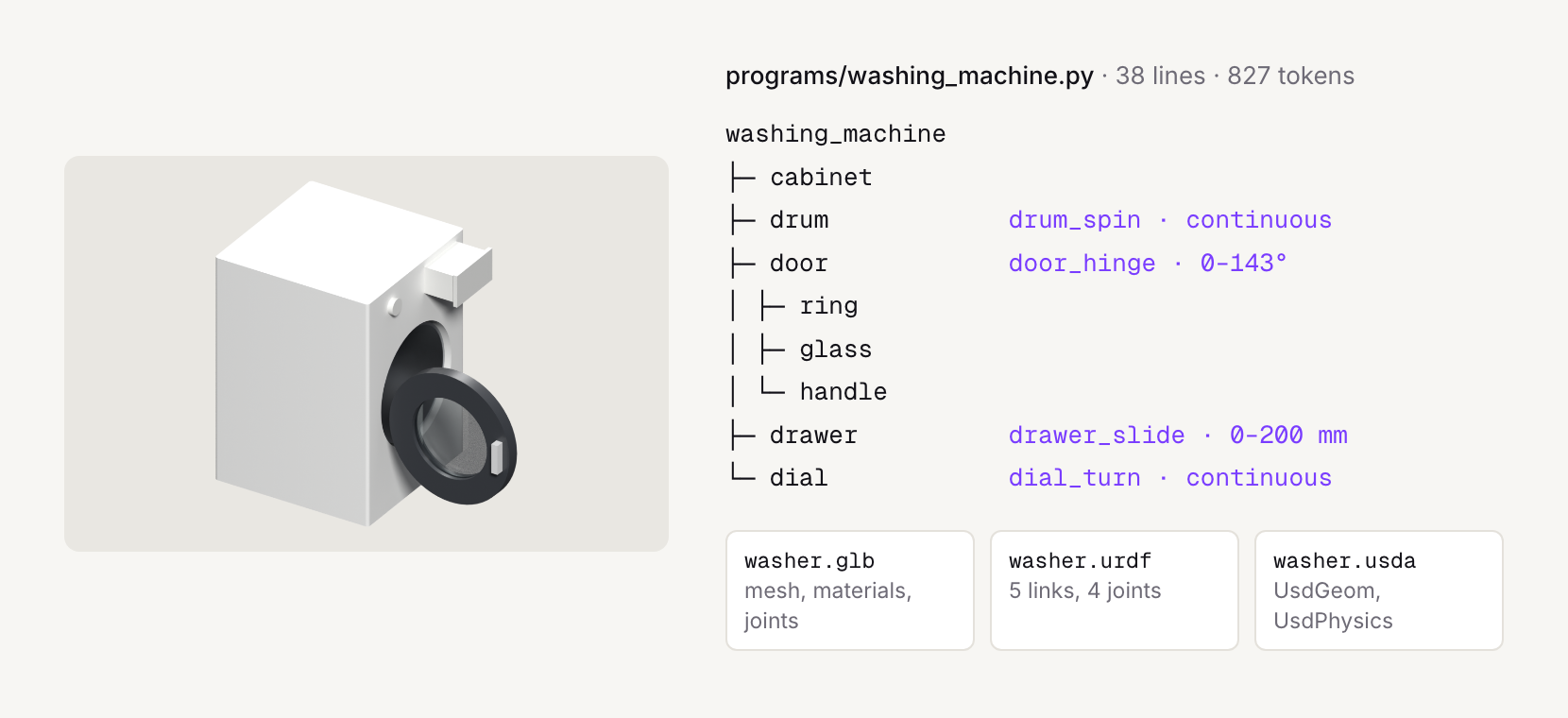
A front-loading washing machine: the cabinet, the drum, the door with its glass and handle, the drawer and the dial, each a named part, and four joints that say how they move.
door = s3d.group("door", ring, glass, handle)                      # the handle and the glass move with it
s3d.joint("door_hinge", door, hinge, axis="-Z", range=(0, 143))
s3d.joint("drum_spin", drum, front.move(0, 400), kind="continuous")
s3d.joint("drawer_slide", drawer, top_band.move(150), kind="prismatic", axis="+X", range=(0, 200))
s3d.joint("dial_turn", dial, top_band.move(-150), kind="continuous")
return s3d.assembly("washing_machine", cab, drum, door, drawer, dial, front=front)
6 lines · 153 tokens (o200k_base)
Twelve articulated objects, a lamp, a refrigerator, a gate, a tripod head, binoculars and more, each one program, to turn in 3D and play joint by joint: the gallery.
Export: GLB, URDF, USD, OBJ, STL
One call; the file's extension names the format; lengths in metres.
| format | what it carries | for |
|---|---|---|
| GLB | meshes, materials, the joints in each node's extras, at the current pose | the web, viewers, game engines |
| URDF | a link per moving part, its joints and their limits, at rest; OBJ meshes beside it | ROS, PyBullet, MuJoCo, Isaac |
| USDA | the same tree in OpenUSD (UsdGeom, UsdPhysics), with the materials | Omniverse, Isaac Sim, USD pipelines |
| OBJ, STL | the meshes alone, at the current pose: OBJ Y up, binary STL Z up | any 3D tool, slicers |
.usd, .usdc and .usdz come from the .usda through USD's own tools.
Install, and a first program
Python 3.13 (recommended) or 3.11. Blender comes with it, as the bpy module: 5.2 LTS on Python 3.13,
4.5 LTS on Python 3.11, the two versions the tests run on.
pip install sand3d # or, in a uv project: uv add sand3d
import sand3d as s3d


def bracket(w=80, d=40, t=6, hole_d=6.6, pitch=50):
    plate = s3d.extrude("plate", s3d.rect(w, d, r=4), t)
    s3d.hole(plate, hole_d, on=s3d.grid(2, 1, pitch, 0))
    s3d.fillet(plate, 1, edges="top")
    return plate

s3d.export(bracket(), "bracket.glb")
10 lines · 121 tokens (o200k_base)
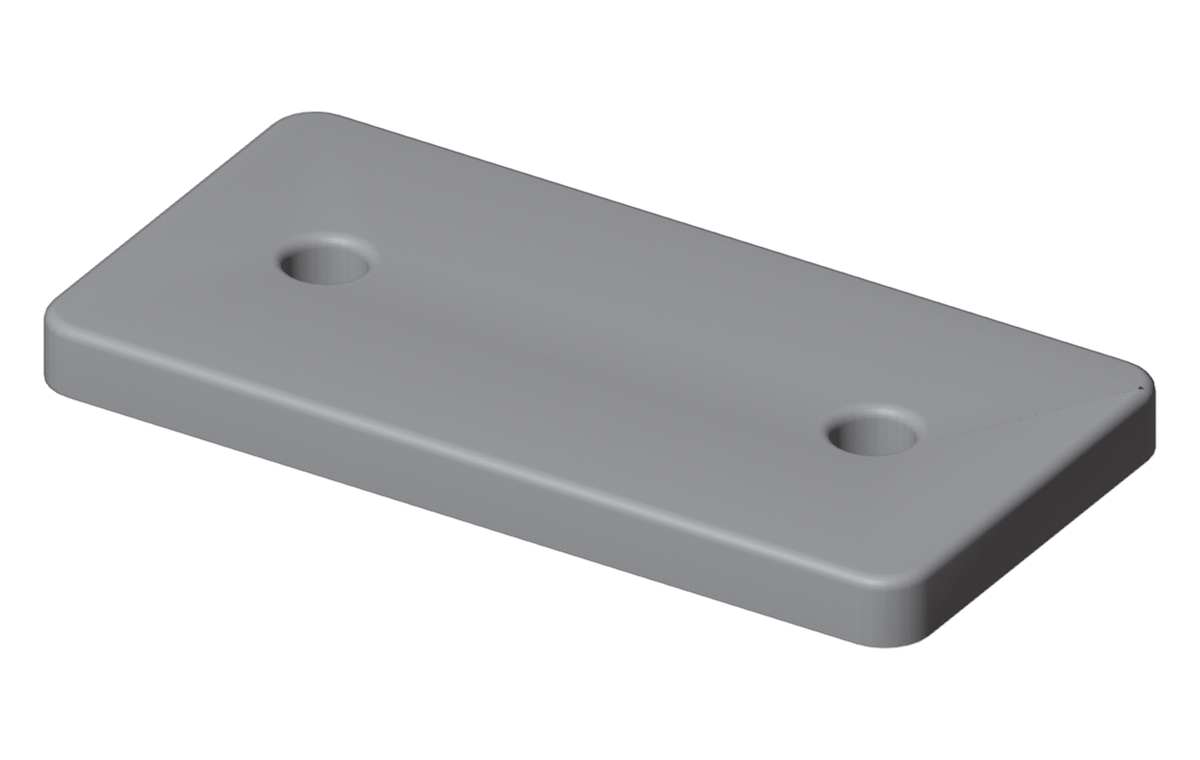
Every verb, with code that runs and its render: the quickstart.
Give it to your LLM
Put the API in the system prompt: the rules of the vocabulary, every signature, and worked examples, in
3 643 tokens. It is served raw at api.md, and
llms.txt points a model at it. For objects of several parts, the guidelines give the
eight rules of an assembly program: the plan first, then the details, then the parts.
Datasets
sand3d programs for four sources of 3D objects, on Hugging Face under CC BY 4.0. The programs come from Sandflow's iterative agentic reconstruction pipeline, which will be described in upcoming releases.
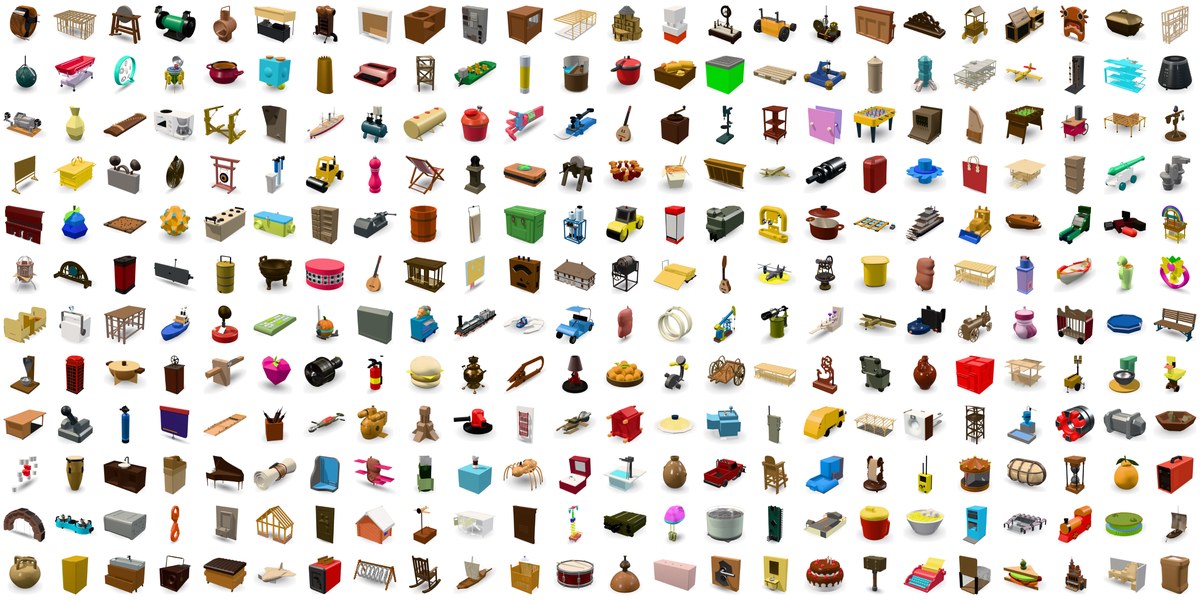 sand3d-objaverse · Objaverse
Everyday objects from Objaverse, each rebuilt as a program.
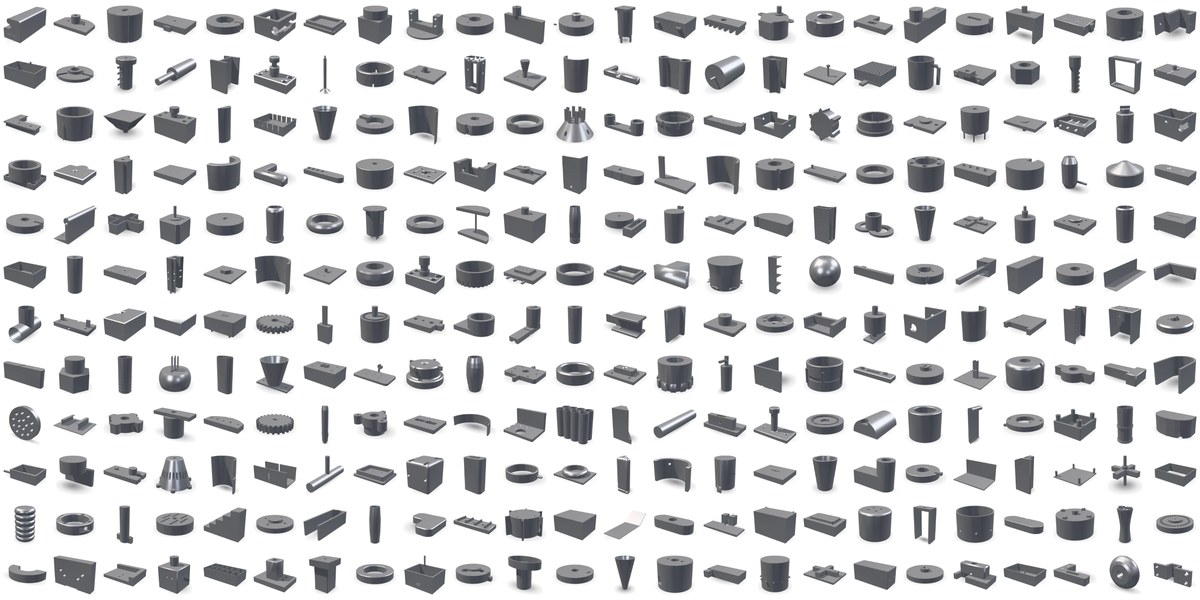 sand3d-cad · CAD
Mechanical parts from public CAD models.
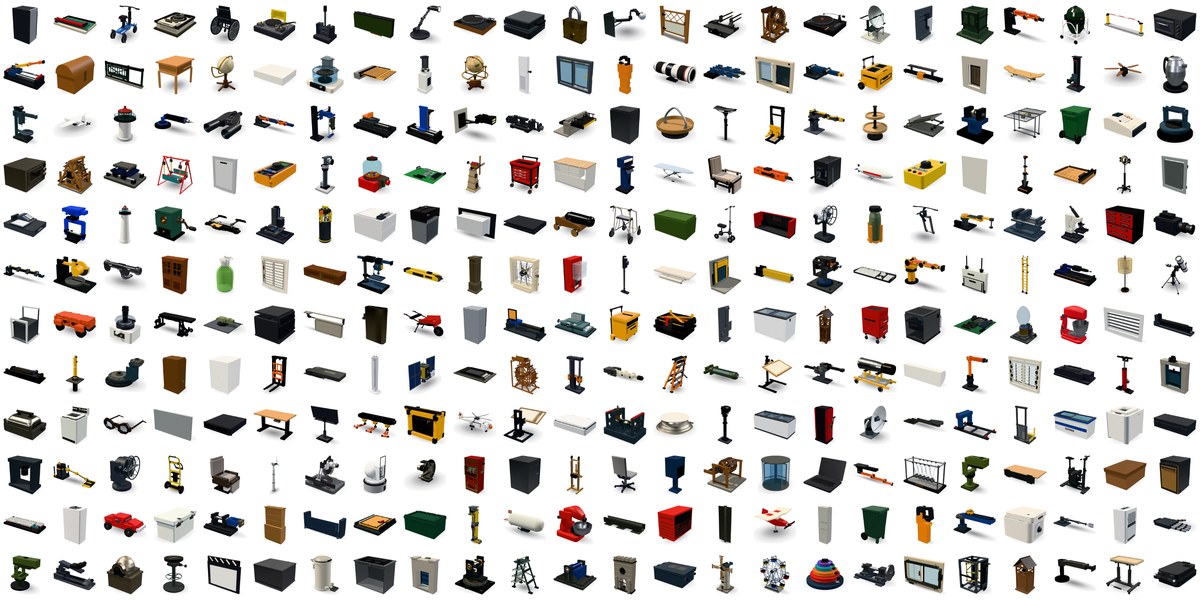 sand3d-articraft · Articraft
Articulated objects from Articraft, their joints declared.
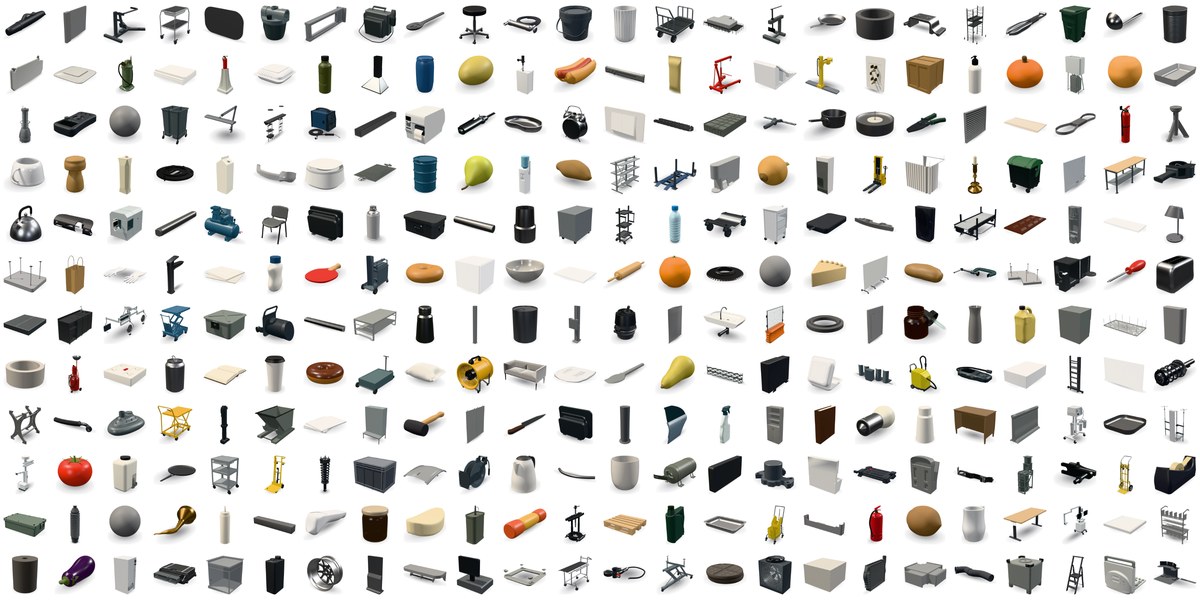 sand3d-simready · SimReady
Simulation-ready assets from NVIDIA SimReady.
Citation
@misc{sand3d2026,
  author = {Neveu, Thibault and Loy, Andr{\'e}a},
  title  = {sand3d},
  year   = {2026},
  note   = {Version 1.6.2},
  url    = {https://github.com/Sandflow-ai/sand3d}
}